Iraq (2003)
On March 19, 2003, at the United Nations Security Council, Colin Powell (then Secretary of State) gives a PowerPoint presentation presenting evidence that the Iraqi regime had accumulated weapons of mass destruction. Information is transmitted through all social media in the world. The Iraqi regime denies the information and invites a group of journalists to visit one of the facilities mentioned by Powell. With the source identified and the information turned “on”, there is little or no scrutiny of American information.
Colin Powell addresses United Nations Security Council on Iraq, 2003.
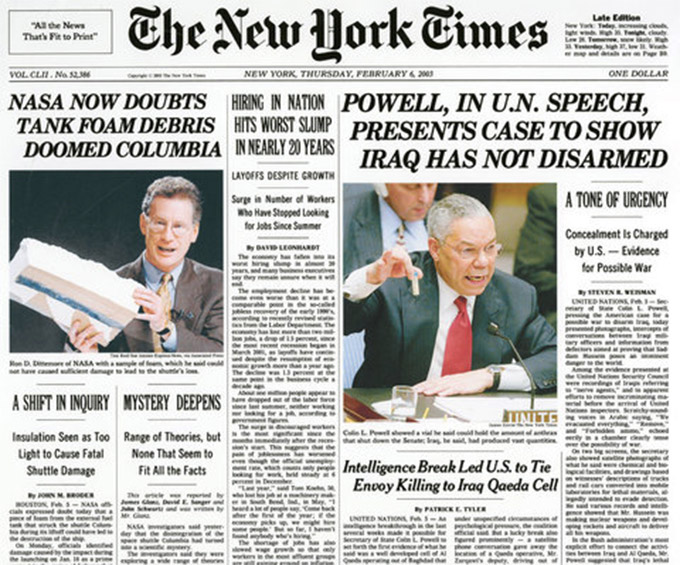
On March 20, the ground invasion of Iraq begins. The war ends in May and the weapons were never found. Powell's political career ends (he was considered presidential candidate). There is no investigation and no responsibility for the “error” is determined.
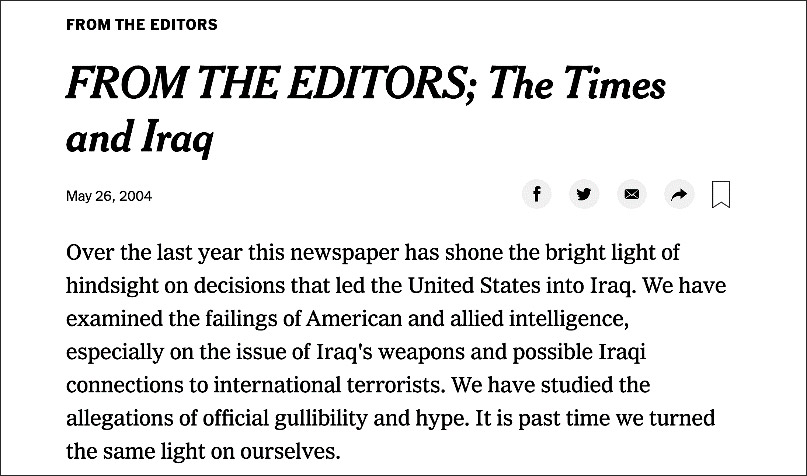
In 2004, The New York Times published an apology for reporting the presence of weapons of mass destruction in Iraq:
“Editors at several levels who should have been challenging reporters and pressing for more scepticism were perhaps too intent on rushing scoops into the paper. Accounts of Iraqi defectors were not always weighed against their strong desire to have Saddam Hussein dared.”
“We consider the history of Iraq’s weapons, and of the pattern of misinformation, to be unfinished business. And we fully intend to continue aggressive reporting aimed at setting the record straight.”
Quase 20 anos depois do início da Guerra do Iraque, um inquérito revelou que 62% de adultos e 64% de veteranos de guerra consideram que não valeu a pena lutar.